
Power of the Word (South Africa)
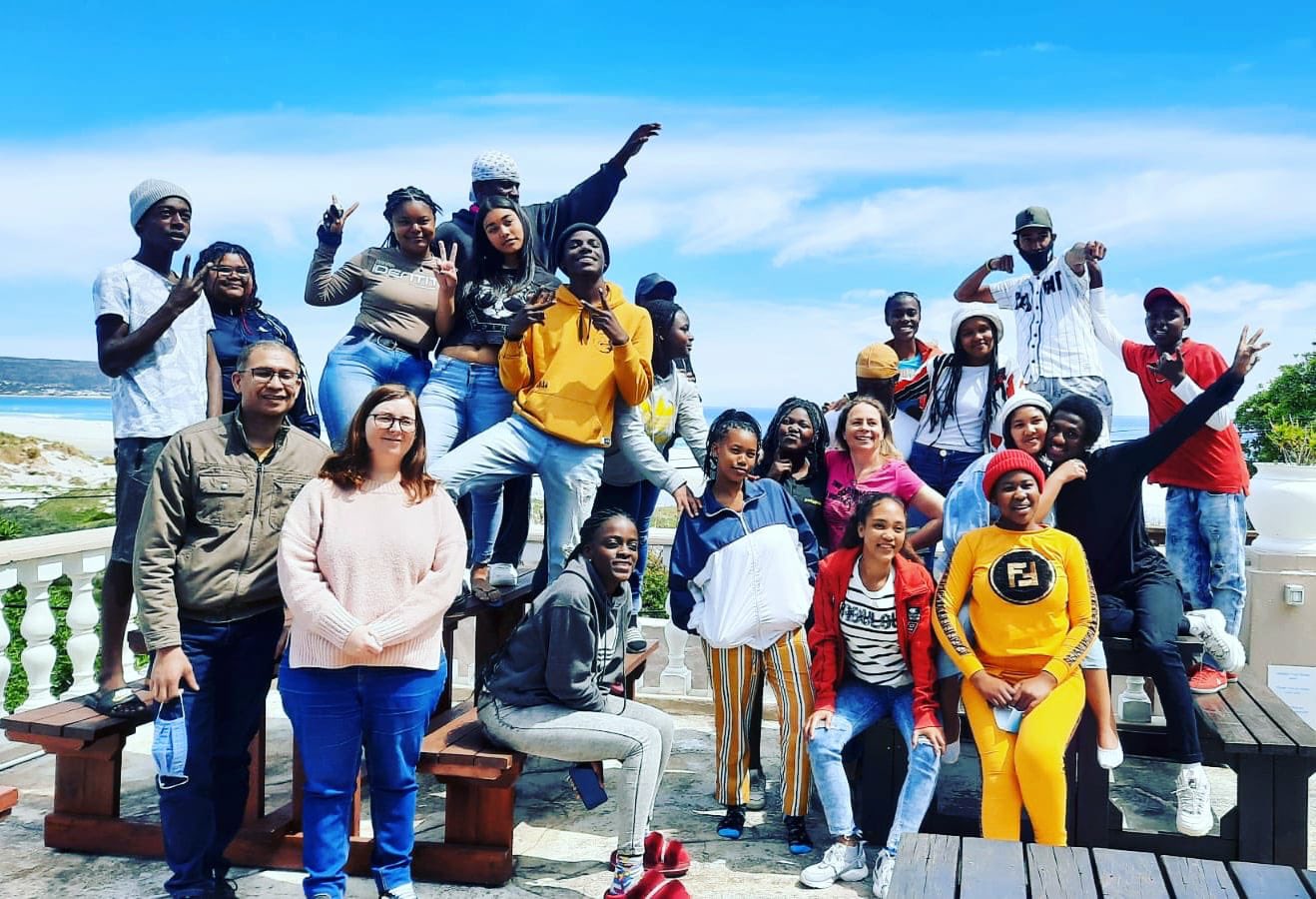
ImaginingOtherwise. 2020/2021
Imagine being taught in a language that’s not your own.
Imagine internalising partial stories of the histories of your language and your culture.
Imagine the value of learning how your everyday words are and can be a means of resistance.
Consider the power of youth activists learning through the arts about complex stories of language, belonging and place.
Welcome to POW: Youth to the Power of the Word
South Africa’s complex language politics informs how its people participate in democracy, producing civic norms the retrace the historical but lasting hegemony of English and Afrikaans. Everyday tactics of youth resistance to these norms have reverberated across history in creative and effective social movements. And it is young people expressing their own linguistic citizenship that POW (Power of Word) takes as its source of energy.
POW is implemented under the auspices of the Changing the Story programme. In POW we take up the politics of ‘voice’ using peer-exchange as our driving ethos between two phase 2 Changing the Story projects:
· ImaginingOtherwise (IO) in Cape Town, which is an arts activism programme working with school-going young people, spearheaded by the Tshisimani Centre for Activist Education and implemented in partnership with BottomUp; and
· Ilizwi Lenyaniso Lomhlaba (ILL) in Graaff-Reinet in the Karoo, an independent youth land activist and environmental justice filmmaking project incubated by the Support Centre for Land Change (SCLC).
What we discovered in both of these projects confirmed that language and different forms of linguistic and/or semiotic citizenship were important vectors of power in social change movements in South Africa. In this context, full democratic participation is affected by the hegemony of English and a rural/urban divide. POW thus brings young creators from across these divides together to critically examine language, spatial politics, and activism. POW has been inspired by the recent work of linguists at the University of the Western Cape that has underscored the role of Kaaps – a historically devalued language in colonial and racist orders – as a living language for cultural and political expression. We hope to contribute in some way to this crucial work.
Our aim is to use creative arts engagement and peer exchange to address the question: what would a youth-led linguistic citizenship strategy look like?
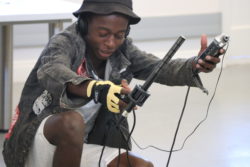
ImaginingOtherwise, 2020/2021
The project brings rural and urban co-creators together with the intention of legacy-building for the living archive to be based at the ImaginingOtherwise Library for Social Change. Film, oral histories, and cross arts creative workshops will form part of a sharing of practices and inform the Word Fest in March 2022.
Partners: Tshisimani Centre for Activist Education and BottomUp with guest practitioners, supported by Dr ally walsh at the University of Leeds and Dr Scott Burnett at the University of Gothenburg.
POW is a short-term intervention aimed at building the skills, social capital, and partner networks of members while contributing to policy debates about language and social change. Look out for our twitter stories about youth engagement and the Power of the Word.
You can read more about both projects in these selected publications:
Walsh, A. & Burnett, S. (2021) Voicing ambiguities in the Ilizwi Lenyaniso Lomhlaba co-creator collective. RIDE: Journal of Applied theatre. (Scott Burnett) https://doi.org/10.1080/13569783.2021.1888708
Walsh, A., Sutherland, S., Visagie, A., & Routledge, P. (2020) ImaginingOtherwise: A glossary of arts education practice on the Cape Flats. ArtsPraxis Vol 7(2b). Available at: https://sites.google.com/nyu.edu/artspraxis/2020/volume-7-issue-2b/walsh-sutherland-visagie-routledge-imaginingotherwise
Resource Archive
Search or browse the resource archive for films, reports, toolkits and other resources produced by the Changing the Story and its commissioned projects. Items relating to South Africa are listed below:
[doc_library doc_category="south-africa"]